Crafting Kinship
Tactile connection and creative activism for challenging times

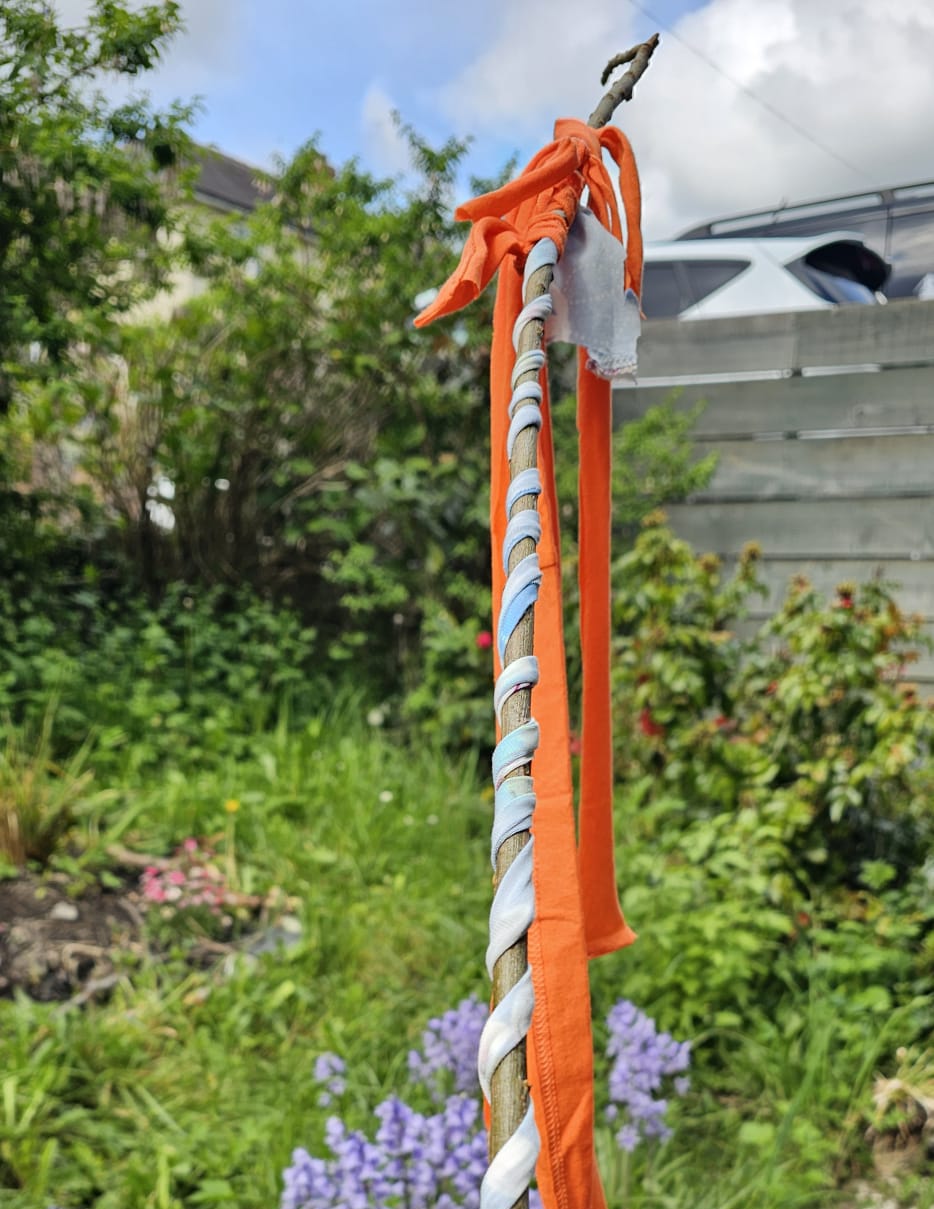
We walk together as a band of merry wanderers, carrying sticks adorned with brightly coloured ribbons, fabric scraps and fake flowers. Stopping at certain points along our journey, prayers are said alongside snippets of local history. Moments of contemplation are followed by riotous whoops and screeches, a collective banging of sticks and staffs. Our small collective of walkers is tracing the outskirts of a small community in Northeast Wales, following the tradition of Beating the Bounds.
The mobile ritual of walking a parish boundary to ‘beat’ away evil spirits is a Rogationtide custom, part of a three-day season of prayer, fasting, and processions that ask for blessings on agriculture, land, industry, and the community. This fascinating custom has become embedded in the Christian calendar. However, the roots of Beating the Bounds can be traced to Pagan, Celtic and Roman times, and various traditions designed to protect land, ensure fertility, and mark boundaries before maps existed.
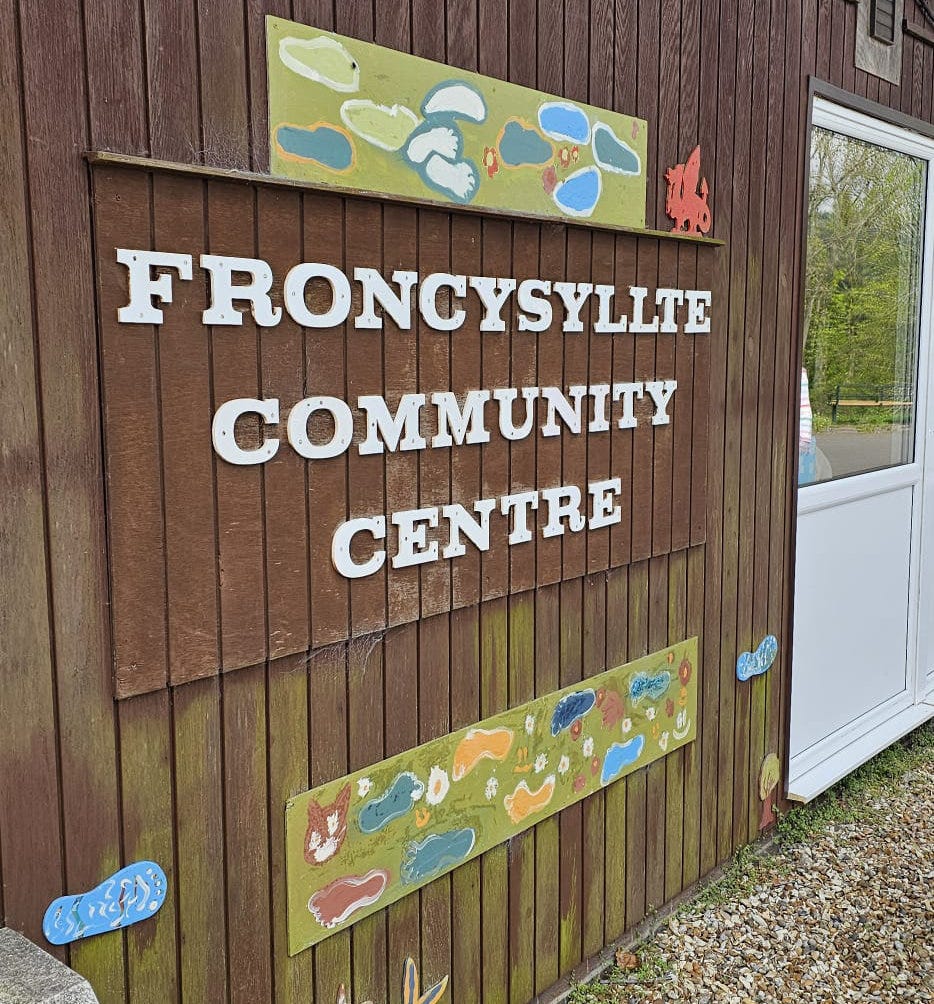
From the minute we meet at my local community centre, the walk group is warm and welcoming. I am not a Christian, and tend to describe my spirituality as ‘mixed’ or ‘interfaith’ in such settings. The pastors leading our walk are mid-life, open and inclusive, welcoming my ‘spiritual but not religious’ identification. They tell my friend and I that their ‘flavour’ of Christianity is to focus on preaching love. When relaying stories of how beautifully held my family and I felt by my hometown’s local church over the event of my Mum’s sudden passing last year, I am met with heartfelt recognition and true empathy.
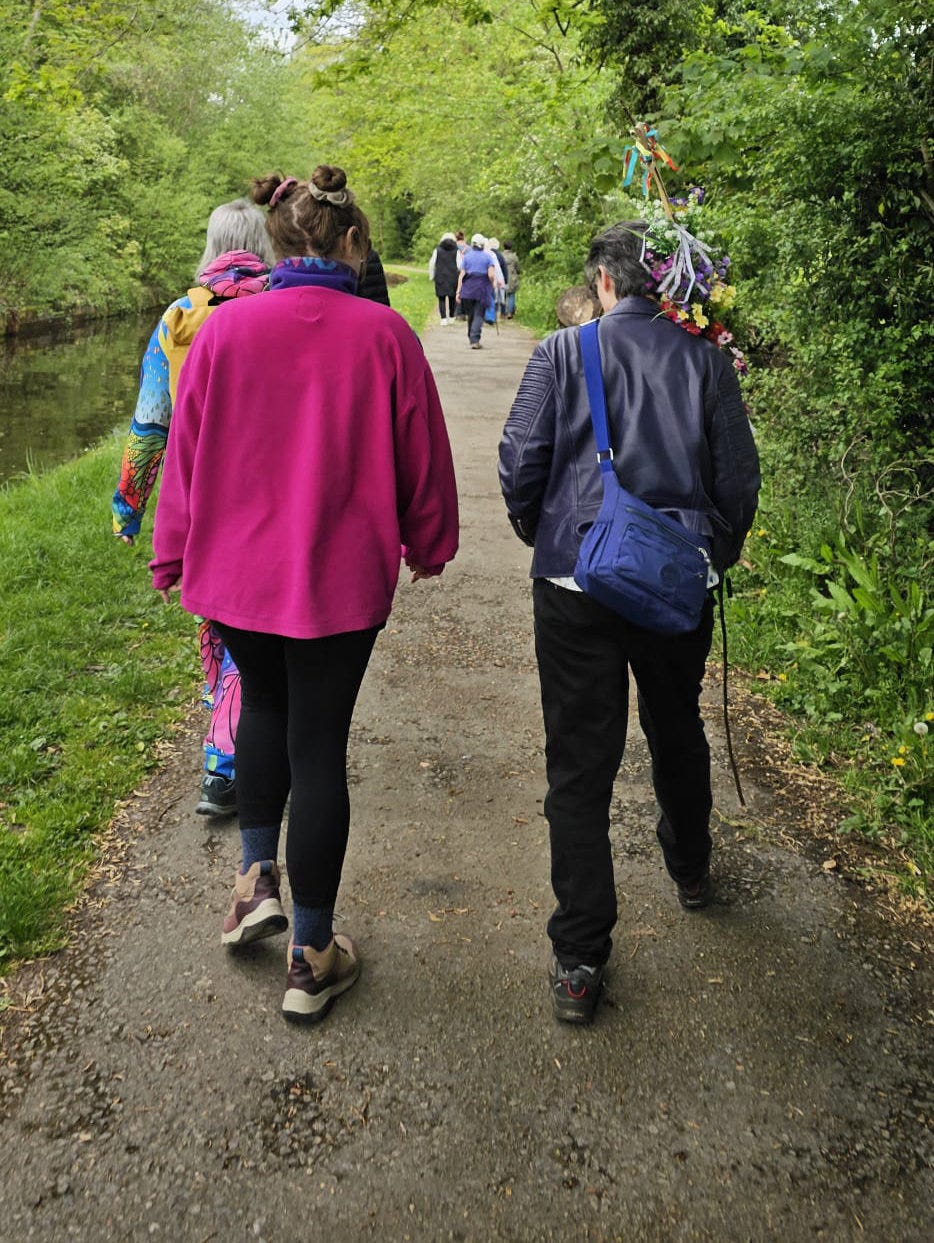
My late-night stick decoration session was unexpectedly enjoyable, and my companion and I arrive for the walk in high spirits. Immediately, I notice how the sticks give us a sense of group identity and protection. Carrying a colourfully embellished stick can only be described as a ‘statement piece’ and is a performance in itself. I remember that I love things that break the everyday like this, little acts of creativity that bring colour and joy into an everyday where people are afraid to stand or speak out. These moments are a gentle but oh-so-wild invitation for curiosity and finding new pathways to relate within community.
‘Crafting kinship’ is a theme which has been circling my consciousness for some weeks now. In times of disconnection and attention-economy-driven modes of being, creating these opportunities for tactile connection is a radical act. It is a form of creative activism that is gathering a sense of urgency for me personally, as I notice how all of a sudden we now need to make a WhatsApp appointment to knock on each other’s doors. Recently I read something about families becoming much more insular; driven by a culture which encourages people to become self-isolating units who are less and less likely to behave in an interdependent way. Modern tendencies such as ‘life on subscription’, employing Alexa as a personal assistant and AI therapists reduce the need to ask for help, social media taking the place of spontaneous interactions and companionship.
Perhaps the need to ‘craft’ kinship feels more pressing as someone who is not making small humans. I think it was around my middle-late thirties that I began to notice how different the world is for those who cannot, or choose not to have children. There is a lot of grief involved in this noticing, as well as an acknowledgement of privilege and benefits. It is continuously revealed to me how much effort and thought I am putting into crafting a life which affords me an equal amount of belonging and kinship to those who have children. Gratitude is helpful here, in recognising that I have a) so. much. space. and b) an opportunity to live differently, to offer an alternative frequency which feeds something helpful back into the web of kinship.

So, what does this look like? I am a huge fan of potluck dinners, bring-and-share feasting. These gatherings often take place around the wheel of the year, celebrating solstices and equinoxes. One of the best things anyone has said to me this year is “I can’t make the party, but can I come over to help you cook?”. Crafting kinship is getting together to organise clothes swaps and thrift exchanges, shared activities which help us step out of a capitalist culture. Gifting second-hand, book clubs and plant swaps are all low-cost, joy-enhancing ways of being together.
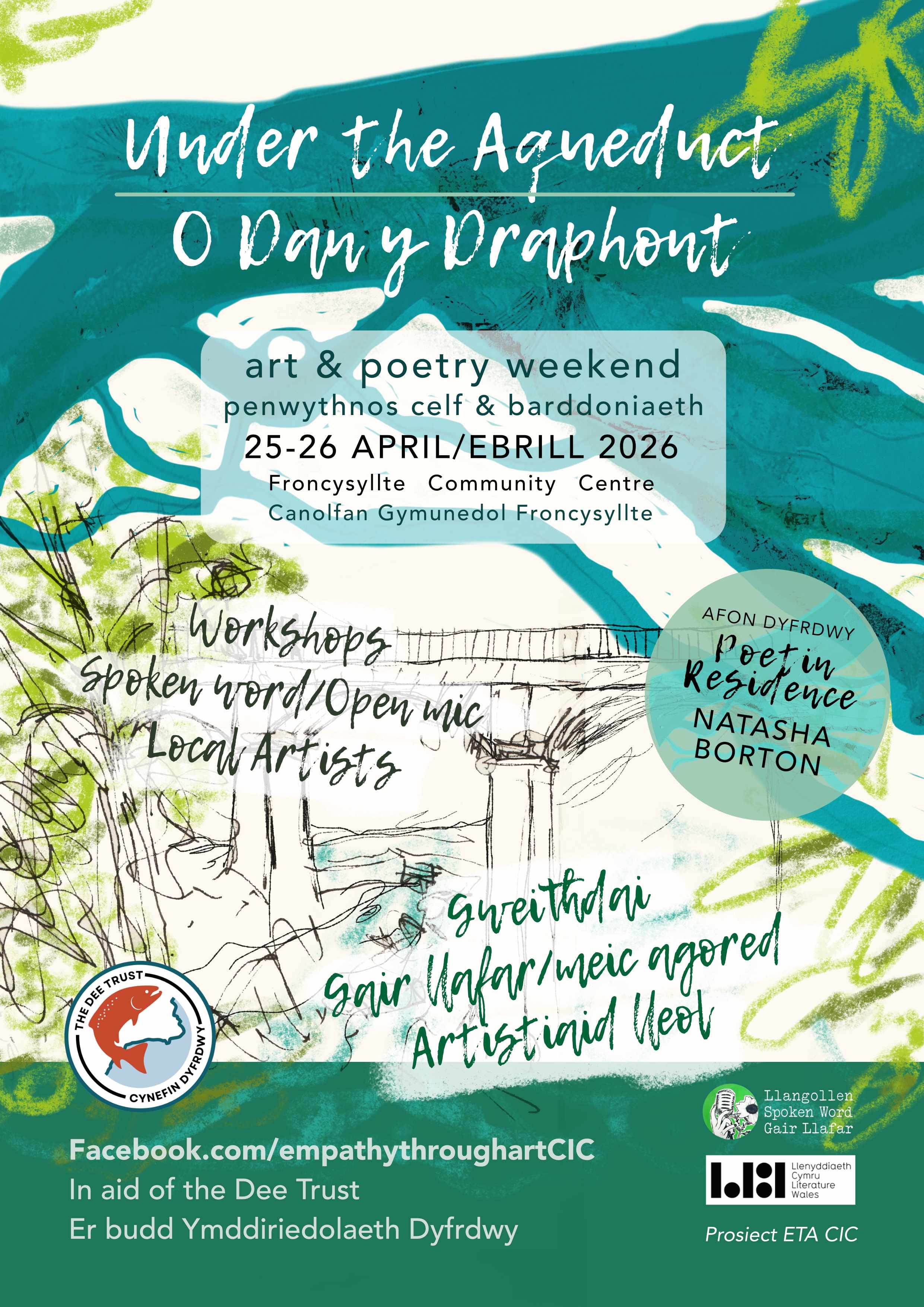
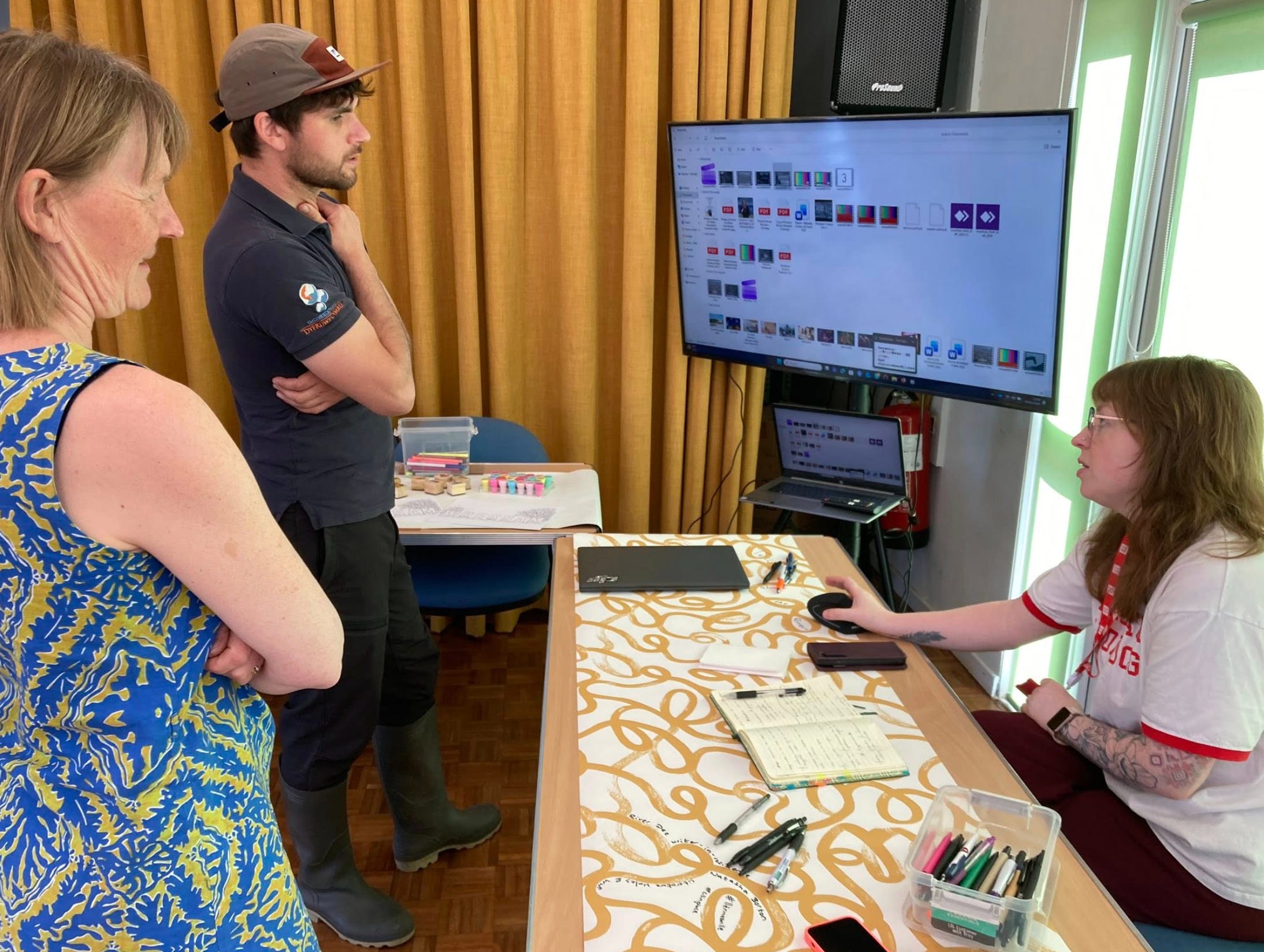
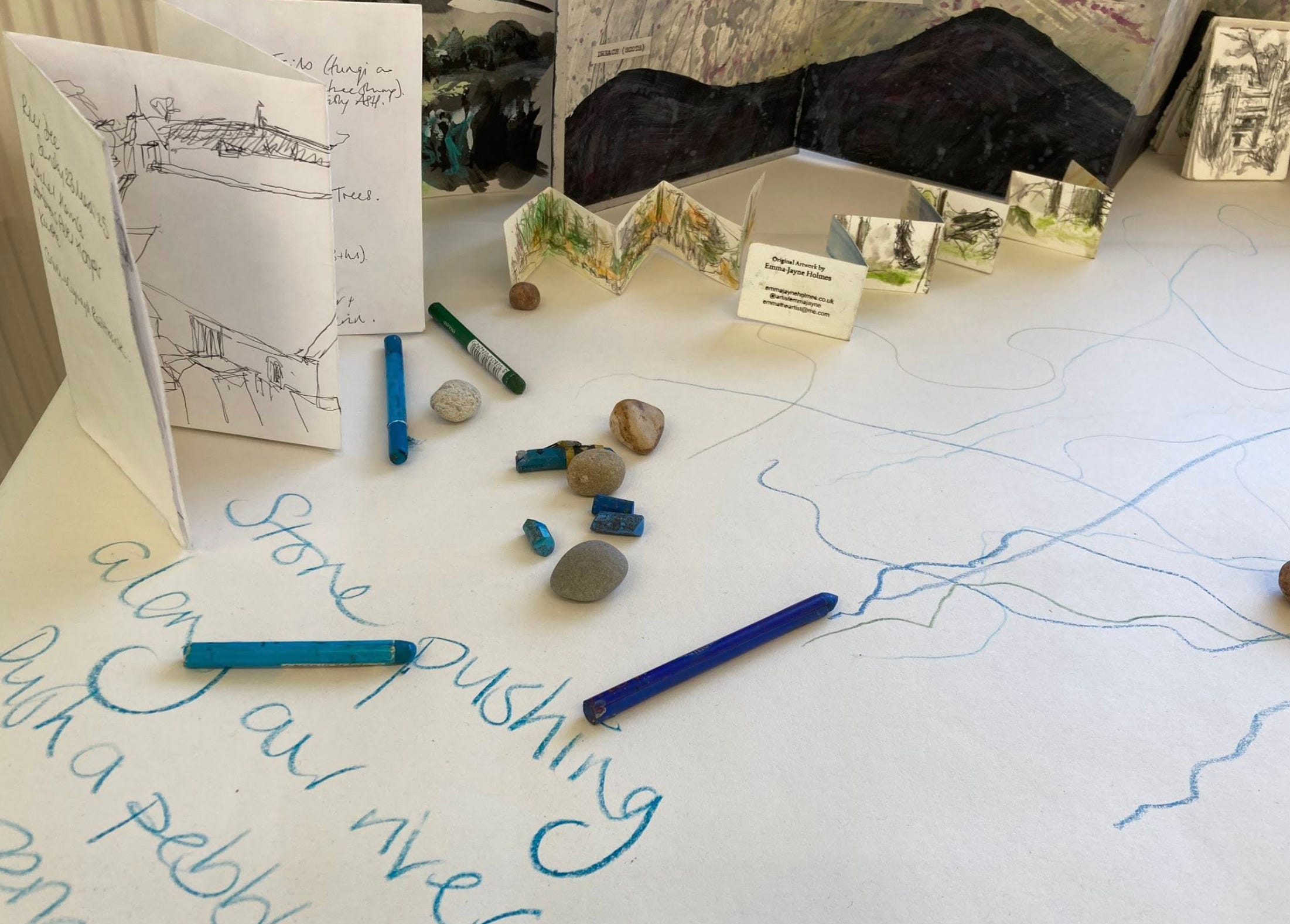
Crafting kinship is hands-on; being together and loving each other lo-fi, away from the algorithms. Supporting your local indie arts scene helps grow real relationships, immersed in spoken word, music, art and film. For me personally, I find more kinship in low alcohol and alcohol environments. Perhaps this is part of my neurodivergent way of relating, finding it easier to connect in low-stimulation environments where people are really being themselves. I also observe that many neurodivergent people like to connect within various ‘niches’, over spaces and activities that involve less masking and conventional social expectations. This May, some of us quiet types have pushed the boat out and organised an art and poetry event in aid of the River Dee, with the support of ETA (Empathy Through Art) CIC and thanks to Suzanne Iuppa. This is the wonderful niche we carved out last weekend, to be together and connect with our local river:
Crafting kinship can simply be practical; I am thinking of my Aunt L (a childfree inspiration) who organises things like a work party to fill in potholes on her street, and donations to share the cost of materials. It is asking for help sometimes, such as skill swapping with a friend who helps you do a proper house clean. I recommend dancing to loud music as you clean, to generate extra joy. After experiencing how beautifully support can come through at times of crisis, I now understand fully how we absolutely must be there for each other. The big things like illness and death are opportunities for supporting each other artfully, with skill and care. Crafting kinship is not pretending that any of this is remotely doable alone, or as an isolated unit. It is knowing you’ll be there too, when it’s someone else’s turn. Crafting kinship is not about pressure or expectation; it is treating each other like family and acknowledging that we live in webs of relationships, that we need and want each other.
I do not write in the spirit of dividing those who have children and those who don’t. Quite the opposite – what I am seeing is that those in conventional families are often as impoverished in terms of connection and belonging. I see mothers my age who feel isolated, exhausted and alone. I see couples in crisis, overwhelmed by the many demands upon them. Alongside these observations, I try to have empathy for others and myself, as someone who does not always find social, collective, relationship or group situations easy. I am often the person who taps out, leaves the party early and works by themselves. Living alone makes it easier to maintain the balance and regulate social energy levels that can quickly run out. Like many people who resonate with the autism spectrum, I connect best over specific interests and passions, finding the dominant culture really quite dull socially. What I see is a culture that depends on instant gratification, alcohol and nights out for release. What I observe is modern families being ‘timetabled’ to their maximum, with harsh ramifications from schools and peer groups for dropping out and doing things differently. What I know in my soul is that a lot of us (whether living alone or collectively) yearn to connect on a richer and more emotionally satisfying level, as well as to help each other with the basics.
Have we forgotten how to really be together?
How can we use our creativity to remind ourselves?
How can we encourage more natural patterns of movement, and diversify the ways in which we might belong within a community?
Abigail Rose Clark, author of Returning Home to Our Bodies, suggests that the somatics of kinship may not depend on biological relations. She writes: “Through exploring the embodied sensation of various memories, I know that when my body feels safe, I feel warm at my back and soft in my shoulders (…) my body knows that the love and happiness I feel in the company of my neighbours who are chosen family feels radiant through my face and hands and includes the warm feeling at my back and softness in my shoulders because this is a love which carries safety and belonging at it’s core”.

We need this softness, safety and trust in times of crisis. Crafting kinship is not just for fun; we may need to depend on each other more than we would like in times of unstable energy and resources. We need it, because our systems and hearts are breaking. A bigger picture of crafting kinship could have radical implications, changing the ways we look at resources within our communities. An exquisite, shining web of relations involves looking and learning together, at things like how essential services and resources are managed. For example, learning locally how water is managed and by whom. It could be visioning how to depend on the big companies less, and depend on each other more. Back when every community had it’s own water source, it was physically easier to see and appreciate how we are all connected.
This post is getting rather serious and long, so let us hold some of those more expansive thoughts for future discussions and conversations. Crafting kinship can be lightweight too; it could be writing a postcard or handwritten letter, or choosing to make the same recipe as a friend even though you live a hundred miles apart. It can be as simple as supporting each other’s events – showing up to each other’s public occasions, book launches, gigs and celebrations. Perhaps there are spaces you can occupy and make use of locally, or even just the great outdoors. These writings are an invitation just to step into a new mode of thinking and just try something new. How do you really like to spend time with people? When does your body soften into easy relationality and togetherness? I’ll end with this post from Priya Parker, author of The Art of Gathering:
“Gatherings crackle and flourish when real thought goes into them, when (often invisible) structure is baked into them, and when a host has the curiosity, willingness, and generosity of spirit to try.”― Priya Parker
I hope this edition of Wild Margins gives you some food for thought, and do send your thoughts and ideas about crafting kinship my way via reply or in the comments. Wild Margins is currently free, and readers are welcome to make a donation to support my work if they wish, via monthly £5 subscription or through one-off donations via ko-fi. Until next time friends…
A lovely post Emily. I really liked the practicality of it. There's so many 'ideas' and 'models' out there trying to respond to the world, but this relationality is a more promising trail of crumbs to follow... x